Updated.
Megan McArdle has written an article for The Atlantic, What Would Warren Do?, on Warren Buffett and the development of value investing, arguing that better information, more widely available, will erode the “modest advantage” value investors have over “a broader market strategy” and Warren Buffett’s demise will be the end of value investment. We respectfully disagree.
The article traces the evolution of value investing from Benjamin Graham’s “arithmetic” approach to Buffett’s “subjective” approach. McCardle writes that the rules of value investing have changed as Buffett – standard bearer for all value investors – has “refined and redefined” them for “a new era”:
When Benjamin Graham and David L. Dodd wrote the value-investing urtext, Security Analysis, in 1934, the rules were more hard-and-fast. Graham and Dodd looked for companies whose price was less than their intrinsic value, and offered various formulas for divining this value.
Buying stock in firms where the intrinsic value of the assets is higher than the market capitalization worked well in the depths of the Great Depression, when investors were wary of holding equity. Between 1929 and 1932, the Dow lost just about 90 percent of its value, bottoming out at 41.22. What economists call the “equity premium”—the extra return that investors demand to compensate for the risk of holding stocks—has never since been so high. That’s why Graham and Dodd could find companies whose liquidation value offered a substantial “margin of safety” for people who bought their equity.
Moreover, book value and other balance-sheet-based metrics have become less useful, as the market, and the economy, have changed. Persistent inflation means that the historical cost of the assets on the balance sheet in many cases bears only passing resemblance to their actual worth. Meanwhile, firms get more and more of their value from intangible assets, like intellectual property or strong brands, that don’t show up in the financial statements. Geico, one of Buffett’s crown jewels, gets much of its value not from physical equipment or even investment savvy, but from a sterling brand name built on relentless advertising.
McCardle says that the rules have changed so much that Graham’s approach no longer offers any competitive advantage:
Much of what Graham and Dodd did so well was simply hard coolie labor. In an era before spreadsheets or financial databases, they looked at company reports and painstakingly did the arithmetic to see where a company stood. That effort offers no competitive advantage in today’s information-saturated market. So while value investors still hew to the core notion of determining a company’s intrinsic value, waiting for the market to misprice the stock, and then buying on the cheap, nowadays that determination has much more of a subjective skill element.
As proof of this assertion, McCardle offers this:
Well, for starters, the market still hasn’t fallen to Graham-and-Dodd levels; most of the managers I talked to groused that they were finding few real bargains. The market was irrational enough to drag down their investment results, but too rational to offer stocks at deep discounts from intrinsic value. Meanwhile, many of their potential investors had just lost half their money.
Value investors love to deride academics and the efficient-market hypothesis, but they can’t deny that stock-screening tools and other analytics have taken away many of the best bargains. At least some managers have lost the will to wait patiently for superdeals and have taken on more risk to get more return. As we walked to dinner through the soft Omaha twilight, a fund manager I had encountered at a “meet and greet” suddenly said, “The only way to make money these days is leverage.”
…
And my dinner companion seemed to be saying that value managers couldn’t compete with other funds without taking at least some of those bets.
McCardle concludes with the following:
Right now, the academic literature suggests that value investing has a modest advantage over a broader market strategy. Better information, more widely available, may continue to erode that edge. But the principles of prudence, patience, and thrift will always, in the end, offer a better chance at outsize returns. The question is whether, once Saint Warren passes, his followers will find the courage to stick to them.
In response, we’d like to make the following observations:
Better information, more widely available, will not erode value’s edge
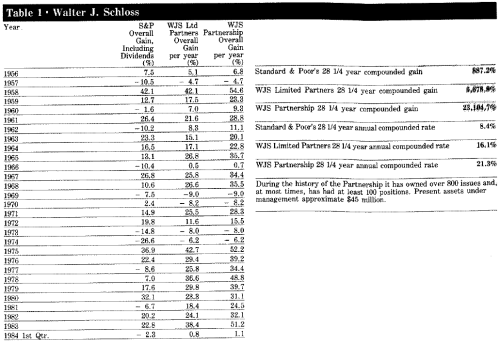
There are as many different styles of value investment as there are value investors, the uniting element being an adherence to the concept of “intrinsic value,” which is simply defined as a measure of value distinct from price. Many investors describing themselves as value investors have subtly different measures of intrinsic value, from liquidation value, to asset value, to earning power, to private market value and, if the fund manager McCardle met at the twlight “meet and greet” is an indication, some of the investors wearing the “value” badge do nothing of the sort. While investors of the same stripe often coalesce around the same opportunity, there are so many different perspectives that one type (say, the liquidation value investor) could easily sell to another (say, the earning power investor), and both could be right in their assessment of the intrinsic value of the stock, and have made money in the process. This means that diffusion of information won’t cause the value opportunities to disappear, because the interpretation of that information is the key step. As Shai points out in the comments with his Klarman quote, value investment is as much about attititude as it is about intellect or access to information. Being smart, having five screens and a Bloomberg terminal won’t get you close to Walter Schloss’ record, which he achieved with a borrowed copy of Value Line working 9.30am to 4.30pm.
Buffett has not rejected Graham, and has not redefined value
Graham’s contribution was to establish the value investment framework – the concept of intrinsic value – and to describe how one could operate successfully as an investor, most notably through the concept of margin of safety. Graham discussed a number of ideas about the manner in which intrinsic value could be assessed, and was so expansive in his teaching that he left very little ground uncovered for future value investors. It is a tribute to Buffett’s genius that he was able to find new ground within Graham’s framework, which he did by blending Phil Fisher’s philosophy with Graham’s. Buffett’s divergence from Graham’s methods was not, however, a rejection of Graham’s philosophy. Buffett has said on occassions too numerous to quote that he still works within Graham’s framework and has said that his change was a function of the increasingly large sums of capital he had to invest, and not a problem with Graham’s approach. In a June 23, 1999 Business Week article, Buffett said:
If I was running $1 million today, or $10 million for that matter, I’d be fully invested. Anyone who says that size does not hurt investment performance is selling. The highest rates of return I’ve ever achieved were in the 1950s. I killed the Dow. You ought to see the numbers. But I was investing peanuts then. It’s a huge structural advantage not to have a lot of money. I think I could make you 50% a year on $1 million. No, I know I could. I guarantee that.
When asked in 2005 what his approach would be if he had to invest less than $10M, Buffett still indicated that he preferred Graham style securities. That’s not a rejection of Graham’s investment philosophy, or his approach.
Don’t bother looking for Graham-style opportunities, they’ve disappeared
Leave them all for us. If there was ever an investment style that should suffer from too many practioners, Graham’s “net current asset value” proxy for liquidation value investing is it. NCAV investing is about as simple as investing gets, and a free screen is all that an investor requires to find NCAV opportunities. Yet our research demonstrates that even this strategy continues to outperform the market. We probably can’t run a multi-billion dollar portfolio on the basis of a simple NCAV screen, but we’ll cross that bridge when we get to it. For the average investor, investing in Graham-style NCAV opportunities is all we’ll ever need. You say those opportunities have disappeared? Have a look at the screens on our blogroll. There are plenty there. When those opportunities do disappear – and they will eventually – it won’t be because of all those supercomputers chasing them, it’ll be a function of valuation. Prices go up, and prices come down. When they’re up, it’s hard to find investable opportunities, and when they come down, it’s easier to do so. It has always been thus, and it will always be so. When there aren’t many opportunities around, that’s a signal from the market. It’s telling you to wait. As a friend of Greenbackd says, “Patience can be a bitter plant, but it has sweet fruit.”
There are other value practitioners who will carry the torch forward
Klarman, Tweedy Browne, Greenblatt, Tilson, Dreman, Gabelli, Miller, Price, Whitman, Pabrai, Biglari (please insert any names I’ve forgotten into the comments) and a host of others toiling away in obscurity will carry the torch forward. Value investment is in good hands.
Read Full Post »


 Greenbackd